My Personal Path to the “Promised Land of Pain-Freedom”
My Personal Path to the “Promised Land of Pain-Freedom”
Below are recounted the details of my journey with knee injury, and the development of arthritis. Hopefully, my story will prove to be of great benefit and encouragement to you on your own voyage.
My left knee took its first big hit in the finals of the Christmas wrestling tournament during my junior year in high school. At the start of the second period, I began in the down position. When I stood up, my opponent put his shoulder against the outside of my knee as he drew my ankle toward him, and….I heard a “crack,” and felt my knee buckle inward. I could not continue the match.
I clearly remember what came next: Soon after, the local orthopedic surgeon took a large needle and drew a great deal of blood out of my knee--and then put me in a brace. Somehow over the ensuing weeks, with the help of my coach taping my knee before each match, and my determination to overcome this setback with strengthening, I was able to successfully return to competition. (Oh…to be 17 again….) Eventually, I even went on to have an undefeated senior year—which included winning Rhode Island state and New England regional championship tournaments. More importantly, I passed the physical requirements and was inducted into the United States Naval Academy at Annapolis, Maryland two weeks after high school graduation.
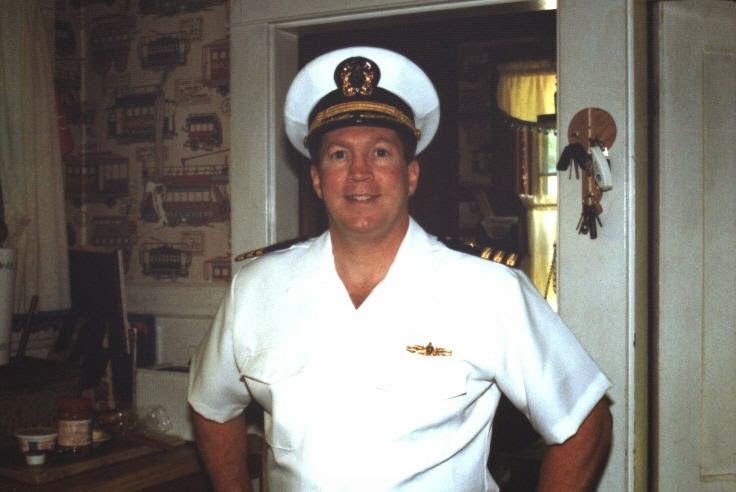
My left knee took its second big hit a few months later--at the obstacle course on Hospital Point in the Naval Academy Yard during the fall of plebe year. As I jumped down from an upper platform to a lower platform on one of the obstacles, my left knee completely gave way. It blew up again—exactly as it had the first time it was injured. This time, I ended up in surgery.
In the aftermath I was informed that I had suffered the “terrible triad”—which included: 1) medial collateral ligament (MCL) rupture, 2) anterior cruciate ligament (ACL) rupture, and 3) a torn medial meniscus. The surgery performed on me included: a) “reefing” (stitches placed to “tighten up”) the MCL, b) a transfer of my medial hamstring tendons (known as a Slocum transfer) intended to at least partially replace the function of my now non-existent ACL, and c) a complete removal of the medial meniscus.
This all took place, as an “open” procedure, before the wide adoption of arthroscopic surgery—and before sports medicine was established as a sub-specialty. There were, as yet at that time, no techniques developed for ACL reconstruction. And, unfortunately, the importance of preserving the medial meniscus was not yet an integral part of mainstream orthopedic understanding.
Looking back now, as an orthopedic surgeon who is fellowship trained and experienced in both sports medicine and joint replacement surgery, the following has become clear to me regarding what actually happened to my knee:
The first injury likely involved both the MCL and the ACL—but not the medial meniscus. The MCL has a well-recognized ability to heal and reset the proper tension on its own (it actually has special stem cells which give it this capacity)—i.e. without surgery. The ACL does not have this ability (it has none of the same stem cells that the MCL has)—and, in retrospect, I do remember episodes consistent with what is known (and I certainly can recognize) as “ACL insufficiency” in between the first and second injuries. I am certain that the medial meniscus was not injured during the first trauma. If it had been, it would clearly have been impossible for me to have had such every-day functional and athletic success in between the two injuries.
The second injury amounted to a re-rupture of the MCL and a tear of the medial meniscus—in the setting of previously-established ACL insufficiency.
From that point, after surgery I eventually returned to an athletically active life. I continued to wrestle at Navy. I even played nose tackle on the Navy Sprint Football team my senior year. After graduation, I went into the fleet as a Surface Warfare officer. Running and bicycling became the mainstays of my physical conditioning. After competing in several races at various distances over the succeeding years, I completed my first marathon (the Marine Corps Marathon in Washington, DC) in 1980.
The arc of my life trajectory then saw me leave active duty and embark upon a career in medicine (eventually orthopedics) in New York City—where I played rugby, and also completed many New York City Marathons.
It was in the midst of the first few years after I had finished all of the medical school, orthopedic residency, and sports medicine and joint replacement fellowship training—and was happily busy in practice as a full-fledged attending surgeon at the greatest orthopedic center on earth (Hospital for Special Surgery in New York City—as they say, “you can look it up”)—that I first began to notice pain in my left knee after running. This would have been around 1995—almost 25 years after the plebe year knee surgery. Life was good, and at age 42, I felt I was in the prime of my life.
This, however, is when things began to “get interesting.”
Of course, I got an x-ray and an MRI. Other than some early thinning of the articular cartilage on the femur and tibia—in the compartment where the medial meniscus had been totally removed, there were no surprises seen.
The first thing I tried was a lifestyle change. To reduce impact loading, I reduced running and switched to bicycling, almost exclusively. Five years went by. I had gained 30 pounds, and my knee was beginning to hurt when I got out of bed in the morning—every morning.
This time, the first thing I did was try to lose weight—and I also stopped running completely and began taking over the counter NSAID’s. (My favorite became Aleve Liquid Gels.) It did not take long for these efforts to prove ineffective.
Perhaps not surprisingly (as a surgeon), my next move was to seek a surgical solution. Another round of x-ray and MR imaging revealed further thinning of the articular surfaces. To my chagrin, there was nothing to indicate that a simple arthroscopic procedure of any kind would be of benefit—i.e. there was no obvious mechanical irritant that might benefit from arthroscopic removal. On the other hand, it was also clear that there was no apparent contraindication to another procedure which was coming into vogue at the time—meniscus allograft transplantation.
As it turns out, literally thousands of open meniscus removal surgeries, like the one I had been subjected to, had been performed in several decades leading up to the turn of the century (20th to 21st). As orthopedic knowledge and understanding progressed—and the use of arthroscopic partial meniscus removal became standard of care--during this same period, it also became clear that the chance of developing arthritis in direct relation to the loss/removal of meniscus tissue tracked roughly with the portion of meniscus tissue loss. Bottom line: complete (100%) removal of meniscal tissue was found to result in 100% probability of developing directly-related arthritis. Fortuitivly, as arthroscopic surgical technique developed, and as a focus on sports medicine developed, and as the tissue transplant industry developed, the prospect for transplantation of a cadaver-derived meniscus into a knee which had undergone prior total meniscus removal emerged.
Naturally, an orthopedic surgeon in a supremely academic environment, I was “in the know” regarding who—in the entire world of orthopedic surgery—had the most experience and best “track record” in this procedure. As a result, before long I went to Atlanta and had a meniscus allograft transplant procedure by the legendary (and wonderful human) John Garrett, MD in the year 2000.
My recovery was uneventful. I was soon even able to return to running around a quarter-mile track at the local high school. Luckily though, sanity prevailed, and I decided not to “test fate” with my new meniscus. Instead, I returned to riding a bicycle (stationary this time) as the mainstay of my aerobic fitness.
Unfortunately, the next five years witnessed the return of pain in my knee. This time it was not after exercise. It was after a long day on my feet in the operating room. The stationary bike actually made it feel better.
Another round of x-ray and MRI revealed what I feared most: My knee had “spit out the meniscus allograft like a watermelon seed.” I was now “bone-on-bone” at age 52.
It was at that time, now well over twenty years ago, that knee replacement surgery became a “sword of Damocles” hanging over my future. It does not matter (and I will not divulge) who actually voiced that opinion. What matters is this: In that moment, Divine Inspiration made me recognize the following:
1) the resources of the premier orthopedic institution in history were at my disposal
2) the quality of my education and experience made it entirely possible that, with proper focus and persistence, I could find a completely satisfying alternative to knee replacement surgery—even in the face of “bone-on-bone” severity, and
3) ultimately, success would not only be measured by my personal experience—but in the leveraging of my personal experience to help many more people than those whom I could ever possibly interact with in private practice (i.e. one-on-one).
Thus began a determined course of “trial-and-error” with myself as the only guinea pig.
I read a lot. I thought a lot. I prayed a lot. I also hurt a lot.
Then, a few things began to come together in my search for answers. A new type of brace—called an “unloader” became available. My background as a mechanical engineer immediately recognized its utility. Perhaps equally important, scientific evidence began to emerge indicating that NSAID’s inhibited bone healing. Furthermore, the details of bone structure and metabolism had been worked out long before. However, my own appreciation of it now led me to develop the analogy in which I correlated bone with re-enforced concrete. This important analogy is summarized as follows:
a) Re-enforced concrete has “re-bar” at its core. Bone has collagen. Therefore, an amino acid supplement, which includes all of the “essential” amino acids ,must be included in a bone nutrition program. (examples include Muscle Milk and Nutrament).
b) Re-enforced concrete has concrete/mortar in its structure. Bone has Calcium as its main structural element. Therefore, Calcium Citrate (the citrate form is much more “bio-available” than the carbonate form) with Vitamin D (required for transport of Calcium across the intestinal mucosa) must be included in a bone nutrition program.
c) Re-enforced concrete is constructed by construction workers. Bone is constructed by the activity of enzymes—also known as Vitamins. Therefore, a multivitamin supplement must be included in a bone nutrition program.
Finally, again with trial and error using myself as the test subject, I was able to combine intermittent use of unloader bracing with appropriate nutritional support—while also avoiding the inhibitory effects of NSAID’s—to discover a process which can successfully condition/harden bone in even in the setting of “bone-on-bone” articular cartilage loss.
Along the way, I also learned a much much more.
For instance, it became clear to me that the presence of subchondral bone edema on an MRI, in the setting of a variable amount of articular cartilage loss, correlates very consistently with pain in an individual—and furthermore that, successful resolution of pain in an individual following the bone hardening/conditioning program is usually accompanied by resolution of the bone edema seen on MRI.
This might be a lot more than you expected to hear. I apologize for really “getting down into the weeds” of this subject. On the other hand, I hope it gives those of you out there facing similar circumstance to what I have been through, a sense of optimism.
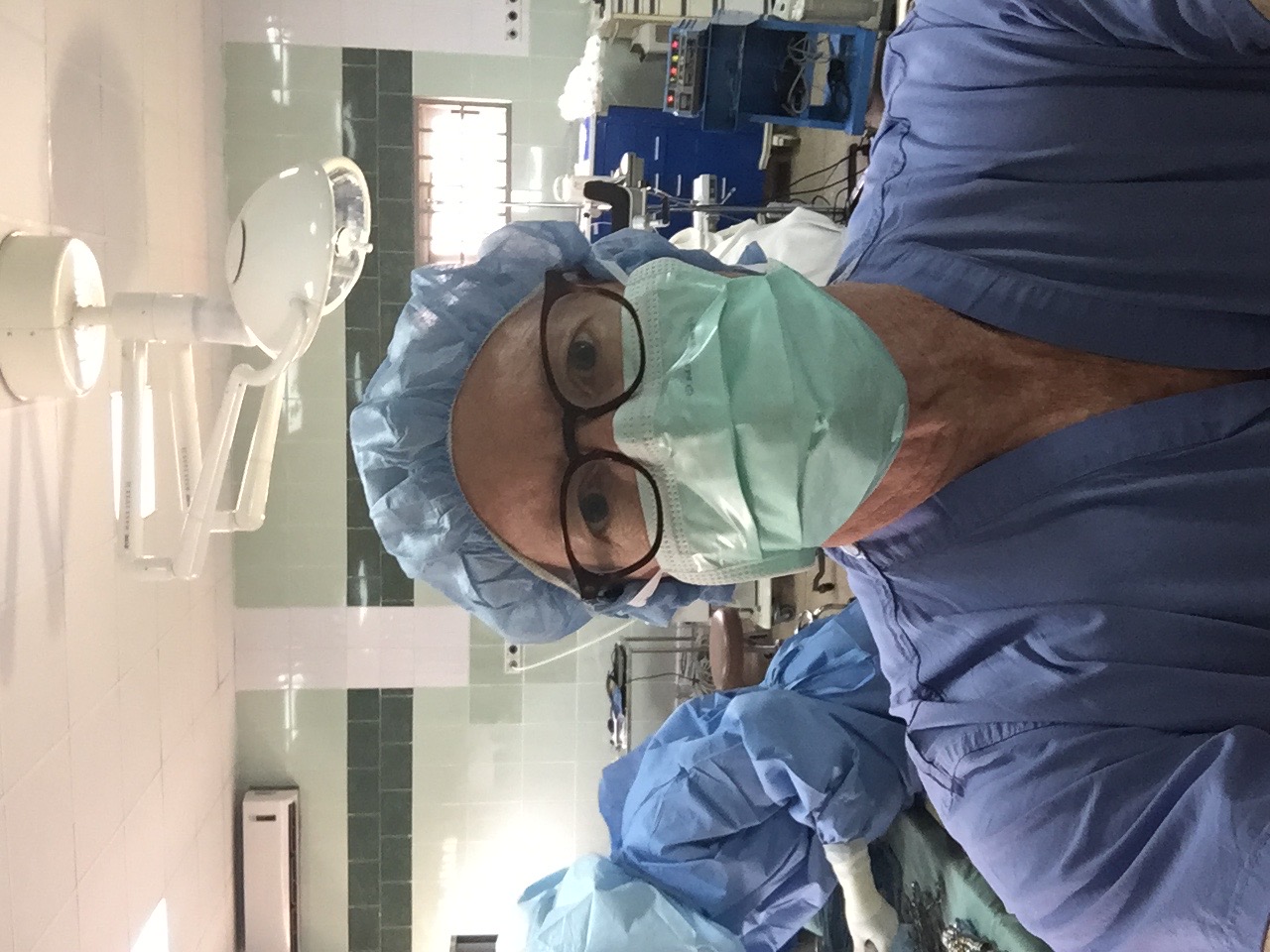
Since arriving at this understanding of how to go from pain to pain-freedom, I have remained vigorously athletic—and completely pain free without further surgery. More importantly, I have helped tons of others to find the same promised land.
None of my journey was effortless. Some of it required a level of discipline and consistency that I will not pretend was easy. And the results did not appear overnight.
However, they did appear. And they have been sustained, without surgery, for well over two decades.
I am sharing this not with intent to suggest that your outcome, after following a program of knee hardening/bone conditioning, will be identical to mine. Individual variation is real, and I would certainly not intend to mislead you by implying otherwise.
I am sharing my story because it is important you understand that the approach which produced my result is a real, systematic, evidence-based process. It is not wishful thinking. It is not a miracle. It is the result of applying rigor and consistency, under Divine Guidance — to a knee that, on paper, was voicing something very different about my future.
Dr. Bonesmith
Michael J. Maynard, MD
Logic and Virtue in Orthopedics
